Waste Recycling in London

Waste Recycling in London provides a practical, organised way to deal with unwanted household and commercial materials, with a focus on sorting, collecting and directing them towards appropriate processing routes. Our service covers general waste, bulky items, furniture, appliances and other recyclable or disposable loads, so customers can choose a straightforward option when ordinary bins are not enough. The aim is simple: remove waste responsibly, keep the process clear, and help you understand what can be collected, what needs separating, and what factors may shape the work.
We handle a broad mix of clearance and collection tasks across the capital, from rubbish removal and waste collection to more specific work such as furniture removal and collection and large item collection. That means the service can suit a one-off household clear-out, a change of tenancy, a property refresh, or a business that needs regular or occasional disposal support. Where items differ in size or material, we can tailor the approach rather than treating every load the same.
For customers comparing options, it often helps to think about whether the job is mainly recycling, disposal, or general clearance. Some loads contain a mix of reusable materials, metal, wood, textiles or electrical items, and that affects how they should be prepared. If you are unsure which route fits best, look through the service pages below, note the type of waste, and then request a quotation when you are ready.
Clearance and collection options
Waste Recycling is built around clear service choices rather than a one-size-fits-all approach. A small number of items may suit a simple collection, while a fuller room, loft, garage or office contents may need a more structured clearance. Pages such as house clearance, home clearance and office clearance describe those common jobs in more detail. This makes it easier to match the task to the right kind of service before anything is arranged.
Different wastes also need different handling. We cover builders waste clearance for construction debris, garden clearance for outdoor waste, and garage clearance where mixed household clutter often builds up. When the load includes a single bulky item, a focused service can be more practical than a full clearance, especially if access is simple and the item can be identified in advance. The right choice depends on volume, material and how quickly the space needs to be restored.
Useful service pages include:
- Bulky waste collection for larger household items
- Waste clearance for mixed loads and general disposal
- Property clearance for broader contents removal
- Flat clearance where access and layout may shape the work
Bulky household items and furniture

Bulky items are often awkward rather than complicated, and that is where a planned collection makes sense. Sofas, wardrobes, beds and mattresses can take space quickly, especially if they are no longer needed after a move, renovation or replacement. Our pages for sofa removal, bed disposal and mattress disposal focus on the kind of item-specific work that helps customers avoid guesswork. Each item type may have its own handling considerations, particularly if it is heavy, bulky, upholstered or damaged.
For mixed furniture jobs, the combined pages can be helpful because they cover more than one item category at once. See furniture clearance, furniture disposal and sofa removal and collection for services that fit rooms, flats and offices with several items to move. Some furniture can be separated into recyclable parts, while other pieces may require direct disposal. Good preparation keeps the collection orderly, but the main benefit is still simple: fewer items left behind and less confusion about what happens next.
When comparing furniture options, think about three questions: whether the item is reusable, whether it can be moved safely, and whether it belongs with a larger clearance. If the answer changes by item, a mixed service may be the better fit. For support with the next step, you can review the relevant page and then ask for a quotation in plain terms.
Domestic waste and home spaces
Household waste is rarely limited to one room. Loft spaces, basements, spare bedrooms, cupboards and under-stair areas all collect objects that are easy to store and hard to sort later. Services such as loft clearance, house clearances and probate clearance are useful where there is more than a single load and the items need separating carefully. These services suit planned work where contents, access and end use all matter.
The domestic side of the work often includes a blend of recycling and disposal decisions. One room may contain cardboard, old toys, broken storage, textiles and a few larger pieces of furniture. Another may contain paperwork, electrical items and miscellaneous household contents. A measured approach helps keep the job organised and makes it easier to decide what should be retained, donated, recycled or removed. Where a property is being emptied rather than just tidied, the process naturally becomes broader, but the same principle still applies: identify, sort and clear.
Household customers usually benefit from reviewing the contents before booking, especially if access is tight or the load is mixed. That does not mean preparing every item in detail; it simply means knowing which rooms, objects or categories are involved. Once that is clear, the quotation stage becomes easier and the service can be matched more accurately to the work required.
Commercial and office waste
Business premises generate their own sort of waste, and it is often shaped by changing layouts, refurbishments, office moves and stock turnover. Our commercial pages include commercial waste collection, commercial waste disposal and business waste removal. These services are intended for customers who need a cleaner, more organised way to deal with non-domestic waste than ad hoc bin use or piecemeal disposal.
Office environments may need removal of desks, chairs, filing items, storage units, monitors or general clutter left after a reshuffle. The pages for office clearances and office clearance help explain that kind of work, while bulky waste collection can suit larger single items that no longer fit the layout. In some cases, businesses want to clear a room quickly so they can reorganise it; in others, they need a staged approach that fits around trading or access requirements.
Commercial waste work is usually easier to plan when the type of premises, the approximate volume and the item mix are known in advance. If you are comparing options for an office, shop, or other workplace, it is worth checking whether the job is a complete clearance or a smaller removal. That distinction helps determine which service page best reflects the work.
Recycling, sorting and disposal routes
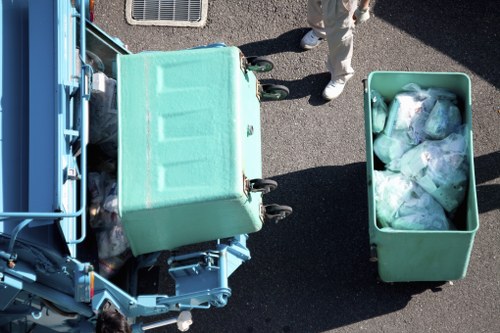
Recycling is not just a label; it is a set of decisions about how waste is handled once it leaves the property. The pages for waste recycling and recycling and sustainability sit at the centre of that process and help explain the difference between mixed disposal and materials that can be recovered. Where suitable, items may be separated by material type so that reusable or recyclable elements do not end up treated as ordinary rubbish.
This matters because not every item should be handled in the same way. White goods, for example, may need a different route from a broken chair or bagged household rubbish. That is why we also list services such as white goods recycle, fridge disposal and waste disposal. The work is most effective when the destination of each item is considered before collection rather than after it has already been moved.
For customers, the practical decision is often whether the load is mostly one material or a mix. If it is a mixed load, a broader recycling and rubbish page may be enough. If it includes appliances, upholstered items or heavier materials, a more specific service can be a better fit. Either way, the goal is to keep the process clear and proportionate to the actual waste involved.
Specialist item removal
Some waste jobs are best understood item by item. Mattresses, sofas and white goods all come with distinct handling needs, and their dimensions or construction can affect how they are moved and where they can go next. The relevant pages - mattress removal and collection, sofa removal and collection and white goods recycle - give customers a focused route when a single category dominates the job. This can be especially useful when the rest of the property does not need a full clearance.
Appliances may also include metals, wiring and other recoverable components, so item-specific handling is helpful. Where the item is damaged, heavy or difficult to move, it is sensible to factor in access and safe lifting at the outset. The same applies to large household pieces that may need more than one person or more than one stage to remove. The aim is not to make the work sound complicated, but to make the category clear enough that the quotation can reflect the actual task.
In practice, specialist removal saves time on decision-making. Instead of wondering whether an item belongs with general rubbish, you can identify the exact category and proceed from there. That is especially useful when several bulky objects have different disposal routes and should not simply be bundled together.
About London

London is a vast capital shaped by the River Thames, which bends through the city from the west before sweeping past central districts and on towards the east. Its long history is visible in layers of Roman, medieval, Georgian, Victorian and modern development, and many neighbourhoods still preserve a strong local identity within the larger metropolitan whole. The City of London remains the historic core of financial life, while Westminster contains many of the best-known national institutions and ceremonial landmarks. Across the river, South Bank and Bankside combine arts venues, riverside walkways and dense urban streets, while the Docklands and Canary Wharf area represent later waves of redevelopment and high-rise commercial growth.
Architecture in London is famously varied. St Paul’s Cathedral, the Tower of London, the Palace of Westminster and the British Museum stand alongside terraces, mansion blocks, post-war estates, railway arches and contemporary towers. The city’s transport network, including Underground lines, suburban rail and bus corridors, reflects its size and historical expansion. Parks also play a major role in city life: Hyde Park, Regent’s Park, Greenwich Park and Richmond Park offer large open landscapes within the urban fabric, while smaller squares and garden spaces provide calmer pockets in many districts. The Thames itself remains one of the city’s defining geographical features, crossed by a dense pattern of bridges and framed by embankments, wharves and pedestrian routes.
London’s cultural life is equally layered. Theatre, museums, galleries, markets, churches, music venues and local high streets give different parts of the city their own rhythm, from the West End to neighbourhood centres in outer boroughs. Borough boundaries, historic parishes and newer planning districts often overlap, which is why the city can feel both unified and highly local at the same time. That mix of scale and distinctiveness is one of the reasons London is so widely recognised, and it continues to evolve through redevelopment, conservation and everyday use.
How to prepare waste for collection
Good preparation does not need to be complicated. It usually means grouping similar items, identifying anything that should not be mixed, and making sure access is clear enough for the work to be completed without avoidable delays. For example, separating furniture from bagged rubbish or keeping appliances apart from general household items can make the job easier to assess. If a property has several rooms or a mixture of materials, a simple inventory can be more useful than guesswork, particularly when you want a quotation that reflects the real scope.
Photographs can also help where the waste is bulky, awkwardly stored or spread across multiple areas, but they are not the only thing that matters. A short written description of the items, the floor level, access restrictions and any fragile surroundings can be enough for many enquiries. The key is not over-preparing; it is making sure the most relevant facts are available so the service can be matched correctly. That keeps the conversation practical and avoids unnecessary back-and-forth.
If you are comparing several pages, note whether the waste is domestic, commercial, mixed or item-specific, then choose the closest fit. You can then ask for a quotation with the main details to hand. A brief, direct enquiry is usually the quickest way to move from uncertainty to a clear next step.
Pricing factors and quotation details

Pricing for waste work is normally shaped by the type of material, the amount to be removed, the access involved and whether the job needs a simple collection or a more involved clearance. A sofa in a ground-floor room is not the same as a mixed loft clearance, and the quotation should reflect that difference. The pages for pricing and quotes and payment and security are useful if you want to understand how practical arrangements are handled alongside the removal itself.
It also helps to be clear about any items that need special handling, such as appliances or awkward furniture, and whether the work includes one load or several. When the waste is spread across a property, the overall job may be broader than it first appears. Clear information at the start lets the service be judged on the real amount of work, rather than on an assumed minimum or an incomplete list. That is the most reliable way to keep the discussion fair and straightforward.
If you are ready to move forward, review the page that best matches your waste type, note the key details and use the contact route on the website to request a quotation. The more specific the description, the easier it is to return an accurate response. For a simple next step, tell us what needs removing and where it is.
Useful policies and service information
Customers sometimes want to read beyond the main service pages before they enquire, especially when the waste is linked to a business premises, a sale, a letting change or a larger property project. The website includes supporting pages such as health and safety policy, insurance and safety, complaints procedure and accessibility statement. These pages are not part of the waste removal itself, but they can help customers understand how the business presents its working standards and site information.
For customers who want broader context, the about us page and the contact us page are useful starting points. They do not replace the service pages, but they do help people move from general interest to a specific enquiry once they know what kind of waste they have. When a website offers several similar services, this sort of navigation helps keep the decision-making manageable without overcomplicating the main task.
Ready to clear the space? Use the most relevant service page, gather the basic details and send a short enquiry. Request a quotation when you are ready, and keep the description focused on the items and access involved.