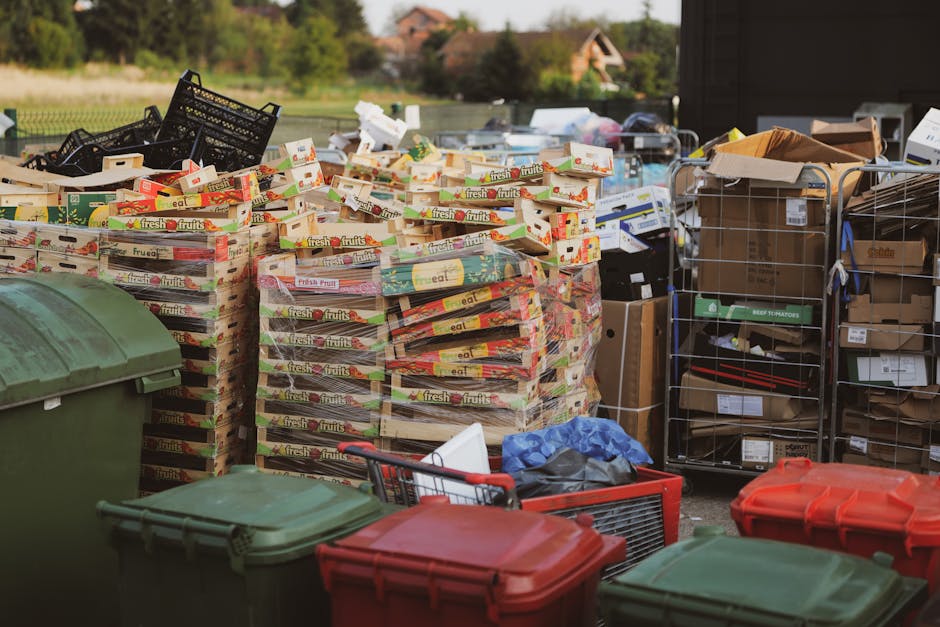
Blocked Bin Collections: Private Rubbish Solutions in Leyton
When your bin collection gets blocked, the whole routine in a busy place like Leyton can go sideways fast. Bags start stacking up. Shared alleyways get messy. The smell creeps in, especially on a warm afternoon, and suddenly a simple household job becomes a proper nuisance. This guide to Blocked Bin Collections: Private Rubbish Solutions in Leyton explains what the problem really is, how private collection works, and when it makes more sense than waiting around for a missed council round to be resolved.
Whether you are dealing with an overflowing bin store, bulky waste that will not fit into standard collections, or a property where access is awkward, there are practical ways to get things moving again. We will cover the process, benefits, compliance points, common mistakes, and the best next steps so you can make a clear decision without guesswork.
In short: blocked collections are not just an inconvenience. Left alone, they can create hygiene issues, neighbour complaints, and extra work for everyone involved. The good news? A private rubbish solution can often restore order quickly and keep the property usable.
Table of Contents
- Why blocked bin collections matter in Leyton
- How private rubbish solutions work
- Key benefits and practical advantages
- Who this service is for
- Step-by-step guidance
- Expert tips for better results
- Common mistakes to avoid
- Tools, resources and recommendations
- Law, compliance, standards, and best practice
- Options and comparison table
- Case study or real-world example
- Practical checklist
- Conclusion
- Frequently asked questions
Why Blocked Bin Collections: Private Rubbish Solutions in Leyton Matters
Blocked bin collections are one of those problems that sound minor until you live with them for a few days. Then it becomes obvious why they matter. In Leyton, where you will find a mix of terraced homes, flats, converted buildings, and busy commercial streets, access for waste removal is not always straightforward. A bin lorry cannot always reverse into a narrow service road. Shared bins can be difficult to present. Residents may miss collection days. And sometimes one overfilled container can throw the entire schedule out.
Private rubbish solutions step in where standard arrangements are delayed, blocked, or simply not practical enough. They can help clear waste that is stopping normal collection, remove accumulated rubbish safely, and restore access to the bin area. That makes life easier for residents, landlords, letting agents, office managers, and anyone responsible for keeping a property tidy and functional.
The issue is not just visual clutter. Blocked collections can lead to:
- overflowing bags and pest attraction
- blocked shared access routes
- complaints from neighbours or tenants
- missed recycling opportunities
- extra pressure on caretakers or property managers
- avoidable stress when waste keeps building up
Let's face it: once rubbish starts spilling into a communal area, everybody notices. Nobody wants to be the person pushing past black bags on the way out with a coffee in hand. It is one of those situations where fast action pays off.
Practical takeaway: if the blocked collection is affecting hygiene, access, or daily use of the property, a private solution is often the most direct way to get back to normal.
If your issue is part of a wider clearance problem, you may also find waste clearance and rubbish removal useful background reads for understanding how larger clear-outs are handled.
How Blocked Bin Collections: Private Rubbish Solutions in Leyton Works
Private rubbish collection is usually much simpler than people expect. In most cases, you contact a provider, explain what is blocked or piling up, and arrange a suitable collection time. A good service will ask enough questions to understand access, waste type, and whether any items need special handling. That saves time later. It also avoids the awkward moment when a team turns up and realises the lift is too small or the waste is heavier than expected.
Here is the usual flow:
- Assessment - You describe the blockage, the location, the kind of rubbish, and how much needs removing.
- Planning - The collection is matched to the right vehicle, staffing level, and disposal route.
- Arrival and loading - The crew removes the waste from the bin area, side passage, garden access point, or inside the property if needed.
- Sorting - Recyclable or reusable items are separated where possible.
- Disposal - Waste is taken to the appropriate facility, in line with standard waste handling practice.
For some people, the main need is a quick fix for a bin store blocked by excess waste. For others, it is a bigger job involving furniture, mattresses, broken white goods, or the aftermath of a move. Services such as bulky waste collection, furniture clearance, and mattress disposal can be relevant when the blockage is caused by items that simply do not belong in a standard bin.
A small but important point: private rubbish solutions are not only about speed. They are also about fit. A good service should match the job to the waste, not try to squeeze every problem into one generic answer. Truth be told, that is where a lot of the value sits.
In Leyton, access is often the deciding factor. Narrow front paths, basement entrances, shared courtyards, and parking restrictions all change the logistics. That is why local knowledge matters. A crew familiar with the area is more likely to plan sensibly and avoid delays.
Key Benefits and Practical Advantages
The biggest benefit is obvious: your waste gets cleared and the blocked collection stops being a daily headache. But there is more to it than that.
1. Faster relief when waste is building up
Private collection can be arranged sooner than waiting for a rescheduled council round, especially if the blockage is caused by mixed waste or a one-off clear-out. That speed matters when bags are starting to smell or a communal area is becoming hard to use.
2. More flexible for awkward access
Some properties in Leyton have limited access, shared gates, tight stairwells, or storage areas that were never designed for modern waste volumes. Private removal can adapt to the property rather than forcing the property to adapt to the collection method.
3. Better for mixed or bulky rubbish
Standard collections are not designed for everything. Old wardrobes, broken chairs, piles of cardboard, garden cuttings, and renovation leftovers can all contribute to a blocked bin area. A private team can usually handle more varied loads in one visit. If the issue is linked to home contents rather than just bin overflow, house clearance or property clearance may be a better fit.
4. Less disruption for residents and neighbours
When rubbish sits around too long, people start noticing. Private solutions help restore a cleaner, calmer space. That matters in flats especially, where one blocked bin store can affect several households at once.
5. Can support better recycling and sorting
In practice, waste is easier to handle properly when it is removed before it becomes a mixed mess. A crew that can separate recyclables, general waste, and specific items will usually do a better job than an overloaded communal bin system. That is a quiet win, but a real one.
| Approach | Best for | Typical strengths | Possible limitations |
|---|---|---|---|
| Wait for standard collection | Routine household waste | No extra arrangement, simple for ordinary bins | Can be delayed if access or overflow becomes a problem |
| Private rubbish solution | Blocked collections, bulky waste, mixed loads | Flexible, quicker, practical for awkward sites | Needs clear booking and accurate waste description |
| Targeted clearance service | Large-scale or specific clearances | Good for deep clutter, contents removal, or property-wide jobs | May be more than is needed for a small blockage |
For commercial premises, there may also be a link with commercial waste collection or business waste removal if the blocked area is affecting staff, customers, or shared service yards.
Who This Is For and When It Makes Sense
This kind of solution is not only for dramatic clear-outs. In fact, many bookings are pretty ordinary once you strip away the jargon. You need it when the bin problem is becoming bigger than the bin system can handle.
Typical users include:
- Tenants and homeowners dealing with overflowing household waste
- Landlords and letting agents managing post-tenant rubbish or missed collections
- Housing managers maintaining communal bin stores
- Small businesses with awkward waste storage or overflow from a busy week
- Site managers dealing with packaging, timber offcuts, or other light commercial waste
- People clearing a property after a move, bereavement, or major tidy-up
It makes sense when one or more of the following is true:
- the waste is blocking normal bin access
- the bin area is overflowing and becoming unhygienic
- collection day has passed and the problem still is not resolved
- the waste includes items too large for standard bins
- you need the area cleared quickly for residents, guests, staff, or contractors
There is also a practical middle ground. Sometimes the issue is not a full collection failure but a one-off bulk problem. In that case, bulk waste collection or large item collection can be the cleaner option. Not every job needs a full property clearance, and not every problem should be left to a council timetable. It depends, really, on what is blocking what.
Step-by-Step Guidance
If you are trying to fix a blocked bin collection in Leyton, a simple process helps avoid confusion. The cleaner and more specific your request, the smoother the result tends to be. Here is a straightforward way to handle it.
Step 1: Identify the blockage
Work out what is actually preventing collection. Is it too much waste? A damaged bin? Poor access? Mixed rubbish left beside the bins? The more precisely you can describe it, the easier it is to choose the right service.
Step 2: Separate what can be removed
Before the crew arrives, group items into basic categories if you can. General rubbish, cardboard, furniture, food waste, and recyclables should not be thrown into one catch-all pile if there is a better option. A few minutes of sorting can make collection much smoother.
Step 3: Check access
Measure gates, stair widths, and any tight passages if the waste is inside or behind a restricted area. Note parking limitations too. In London, access details can make or break the job. A little preparation saves a lot of back-and-forth on the day.
Step 4: Choose the right type of collection
For a simple overflow problem, a rubbish collection may be enough. For a mix of household items, furniture, and general junk, a clearance service may be more suitable. For business premises, commercial waste disposal may be the better route.
Step 5: Confirm what happens to the waste
Ask how the waste will be handled, whether recyclable materials are separated, and whether special items are treated separately. This is not about being fussy. It is about making sure the job is done properly.
Step 6: Prepare the site
Move cars if needed, unlock gates, and keep pathways clear. If the waste is in a communal area, let residents know the collection window. You would be surprised how often that small bit of communication prevents a headache.
Step 7: Review the area afterwards
Once the waste is gone, check for loose debris, broken packaging, or any remaining items that may cause another blockage. A quick sweep can make the difference between "done" and "done properly."
Expert Tips for Better Results
A bit of practical planning goes a long way. These are the small habits that make blocked collections easier to solve and less likely to return.
- Do not wait for the pile to become unmanageable. If bags are already touching the wall or the fire exit, act early.
- Photograph the problem before booking. It helps explain the volume, access, and type of waste without a long phone call.
- Keep recyclables separate if possible. It makes sorting easier and can reduce contamination.
- Use the most accurate description you can. "A few bags" and "two sofa sections plus mixed waste" are very different jobs.
- Check whether the waste is household, commercial, or mixed. That affects how the collection should be planned.
- Ask about fragile or awkward items. Broken glass, sharp metal, and heavy appliances need care.
One more thing from experience: if the bin area is shared, get the story straight before calling anyone in. A blocked collection often has a backstory. Someone moved out. Deliveries piled up. A skip was removed late. The cause matters because it shapes the fix.
For homes with old or heavy furniture, services like sofa removal and collection, bed disposal, and white goods recycle can help clear common culprits without making a separate mess of the rest of the waste.
Common Mistakes to Avoid
Most waste collection problems are avoidable. Not all of them, obviously, but many. The biggest mistakes usually come from rushing, assuming too much, or treating all rubbish as if it were the same thing.
- Leaving the booking too late. A bin store that is already full can get much worse within a day or two.
- Not describing the access properly. If a service arrives with the wrong vehicle or team size, everyone loses time.
- Mixing materials unnecessarily. Mattresses, metal, cardboard, and general rubbish may need different handling.
- Assuming every service covers the same waste types. Some jobs are straightforward; others need more specific arrangements.
- Blocking fire exits or shared walkways. That is a safety issue, not just a tidy-up problem.
- Forgetting about follow-up waste. A single collection may clear the overflow, but it will not prevent the next one unless the underlying issue is addressed.
There is also the classic mistake of using the bin store as a short-term dumping ground and then acting surprised when it becomes a long-term problem. Happens everywhere. Still not a good plan.
Tools, Resources and Recommendations
You do not need much to get started, but a few basic tools make a real difference. Nothing fancy. Just the kind of stuff that keeps a small problem from becoming a bigger one.
- Heavy-duty bin bags for separating loose rubbish cleanly
- Gloves for moving sharp or dirty items safely
- Dustpan and brush for clearing small debris after removal
- Phone camera to document the blockage and share clear pictures
- Tape measure if access is tight or items are bulky
- Labels or marker pens to identify recyclables, donations, or non-rubbish items
For larger or mixed clear-outs, it can help to think in service categories rather than just "rubbish." For example:
- house clearance for full or partial domestic clearances
- flat clearance for apartments and shared-access homes
- office clearance for business spaces with filing, furniture, or bulky waste
- garage clearance for stored items that have quietly taken over the space
- loft clearance when the waste is tucked away above the main living area
If your priority is sustainability, it is worth asking how the waste is separated for recycling and whether any reusable items are diverted from disposal where appropriate. That is especially relevant for furniture, metal goods, and electrical items. For a broader look at responsible disposal, recycling and sustainability is a helpful reference point.
Law, Compliance, Standards, and Best Practice
Waste handling in the UK is not something to take casually. You do not need to memorise legislation to make a sensible booking, but you should expect any reputable provider to follow proper handling, transportation, and disposal practices.
At a practical level, that means:
- waste should be removed and taken to an appropriate facility
- hazardous or awkward items should be identified early
- litter should not be left behind after collection
- the service should act safely around access routes, shared areas, and property features
- materials should be handled in line with normal waste duty-of-care expectations
For landlords, agents, and business operators, there is a wider responsibility to keep premises safe and usable. A blocked bin area may look minor, but if it causes hygiene problems, pest issues, or access restrictions, it can quickly turn into a management issue. In those cases, getting the waste cleared promptly is not only convenient. It is good practice.
If you are handling waste from a commercial site, it is especially sensible to use a provider that understands business waste disposal, because the expectations can differ from a typical household job. The same goes for items that need specialist handling, such as fridges or mattresses. Simple enough in theory. Slightly more involved in real life, as always.
Options, Methods, or Comparison Table
Not every blocked bin issue needs the same fix. The right choice depends on waste type, access, urgency, and how widespread the problem is. Here is a simple comparison to help you think it through.
| Option | Best use case | Speed | Convenience | Notes |
|---|---|---|---|---|
| Wait for normal collection | Routine household bins, no major overflow | Variable | High, if nothing is blocked | Least effort, but not ideal if access is already compromised |
| Private rubbish collection | Overflow, mixed bags, awkward access | Usually quicker | Strong | Good for targeted removal without a full clearance |
| Bulky waste collection | Large individual items | Fairly quick | Strong | Best for furniture, mattresses, appliances, and similar items |
| House or flat clearance | Wider accumulation or move-out waste | Depends on volume | Very strong | Better when the blockage is part of a larger clear-out |
| Commercial waste service | Business premises or managed sites | Usually scheduled | Strong | Useful where ongoing waste management is needed |
There is no prize for choosing the biggest service. Choose the smallest one that genuinely solves the problem. That is usually the smartest move, and it keeps things simpler too.
Case Study or Real-World Example
A practical example helps make this feel less abstract. Imagine a small block of flats in Leyton with a shared bin store at the back of the property. Over a bank holiday weekend, several large items are left beside the bins: a broken wardrobe, a mattress, a few black bags, and flattened cardboard. By Tuesday morning, the collection point is blocked. Residents cannot easily get to the bins. The smell is starting. One neighbour is not amused, to put it mildly.
Rather than waiting for the next round to sort itself out, the managing agent arranges a private collection. The team checks access, removes the bulky items, clears the loose rubbish, and sweeps up the space afterwards. The bin store is usable again that same day. No drama, no prolonged build-up, no guessing.
What made the difference? Three things:
- the issue was identified early
- the waste type was described clearly
- the service matched the actual problem rather than just "taking rubbish away"
That is a pretty normal outcome, by the way. Not glamorous, but effective. And honestly, that is what most people want.
Practical Checklist
Use this checklist before you book or while you are getting the site ready.
- Identify what is blocking the bin collection
- Take clear photos of the waste and access route
- Separate household waste, bulky items, and recyclables where possible
- Check whether anything is sharp, heavy, or awkward to move
- Measure gates, stairways, or tight passages if access is limited
- Confirm whether the waste is domestic, commercial, or mixed
- Make sure shared pathways and fire exits are clear
- Inform residents, staff, or neighbours if the area is communal
- Choose a collection type that matches the volume and item type
- Ask how the waste will be handled after collection
- Plan a follow-up fix if the blockage is likely to recur
If you tick most of those boxes, you are already ahead of the game.
Conclusion
Blocked bin collections are more than an inconvenience. They can disrupt daily life, create hygiene issues, and make a property feel difficult to manage. In Leyton, where access, shared spaces, and mixed property types all affect waste handling, private rubbish solutions offer a practical way to clear the blockage and get things back under control.
The key is choosing the right level of service for the problem in front of you. Sometimes that means a quick collection of overflow waste. Sometimes it means a bulky item removal. Sometimes it is a fuller clearance because the bin area has simply been overwhelmed. The right call is the one that solves the issue cleanly, safely, and without creating another mess behind it.
So if the bins are blocked, the bags are growing, and the smell is starting to make itself known, do not wait for it to sort itself out. A clear plan, a sensible booking, and a decent local team can make the whole thing feel manageable again.
Get a free quote today and see how much you can save.
And once the space is clear, you will notice it straight away - the quiet relief of walking past a tidy bin area and thinking, yes, that's better.
Frequently Asked Questions
What does blocked bin collection mean?
Blocked bin collection usually means waste cannot be emptied as normal because the bin area is full, access is restricted, or rubbish has built up around the containers. A private solution can clear the obstruction and make the collection point usable again.
Can private rubbish collection help if council bins are overflowing?
Yes, it can. If the problem is overflow, bulky waste, or items left beside the bins, a private collection is often the quickest way to get the area back under control while you sort out the wider issue.
How quickly can a blocked bin area be cleared in Leyton?
That depends on the waste type, access, and booking availability. In many cases, private rubbish solutions can be arranged much faster than waiting for the next standard collection, especially when the job is straightforward.
Is this the same as rubbish removal?
Not exactly. Rubbish removal is a broad term, while blocked bin collection is more specific. It usually refers to waste that is preventing normal bin use or collection, whereas rubbish removal can cover almost any unwanted material.
What kinds of waste are usually removed?
Common examples include general household rubbish, bagged waste, cardboard, furniture, mattresses, broken appliances, and mixed clear-out items. If the waste includes specialist items, it is best to mention that when booking.
Do I need a full clearance service for one blocked bin area?
Not always. If the problem is localised, a targeted rubbish or bulky waste collection may be enough. A full clearance is better when the accumulation extends beyond the bin store or affects several rooms or areas.
What should I tell the collection team before they arrive?
Be clear about waste volume, access restrictions, item types, and whether the site is domestic or commercial. Photos help a lot. The more accurate the description, the smoother the collection usually goes.
Can private waste collection handle flat blocks and shared bin stores?
Yes, that is one of the main use cases. Shared bin stores can be awkward, especially in older buildings or tightly packed streets, so a flexible collection option is often the best fit.
Will recyclable items be separated?
Reputable services should aim to separate recyclable materials where practical. The exact process depends on the waste mix, but asking about sorting is a sensible step if sustainability matters to you.
What if the blockage includes business waste?
If the issue is linked to a shop, office, or commercial premises, a business waste or commercial collection route may be more appropriate. That helps make sure the waste is handled in line with the way the site is used.
Is a blocked bin collection service useful for landlords?
Very much so. Landlords often need quick action after a move-out, a missed collection, or a tenant leaving bulky rubbish behind. Clearing the bin area fast helps keep the property presentable and reduces complaints.
What is the best first step if my bin area is already messy?
Take a photo, identify the waste type, and decide whether the problem is overflow, bulky items, or a wider clearance need. Then choose the most specific service that matches the issue. That is usually the fastest route to a clean result.