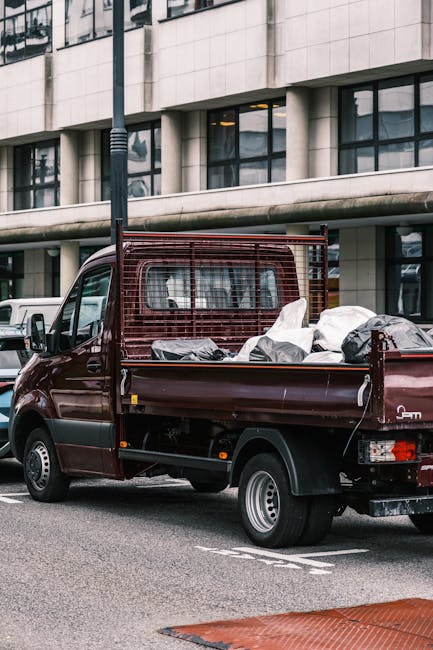
Get an Instant Quote for Rubbish Clearance in SE1

If you are trying to clear rubbish in SE1, you probably want two things: a fast answer and no nasty surprises. Fair enough. Whether it is a sofa blocking the hall, builders' waste after a strip-out, or a full flat clearance near the river, an instant quote can save time, reduce back-and-forth, and help you make a clean decision before the clutter takes over the day.
This guide explains how to get an instant quote for rubbish clearance in SE1, what usually affects the price, how the process works, and how to avoid the common pitfalls that catch people out. You will also find practical tips, a comparison table, a checklist, and answers to real questions people ask before booking.
In short: a good instant quote should be quick, transparent, and based on the actual waste you need removed-not a vague promise that changes later.
Why Get an Instant Quote for Rubbish Clearance in SE1 Matters
SE1 is busy, mixed-use, and often tight on space. That matters more than most people expect. A job in a mansion block near the South Bank is not the same as a ground-floor office clearance in Bankside or a basement flat clearance in Waterloo. Access, parking, lift availability, and stair counts all affect how a rubbish clearance job is priced and scheduled.
An instant quote helps because the decision often happens in the moment. Maybe you have just finished a renovation and the dust is everywhere. Maybe the landlord wants a property emptied before the weekend. Or maybe the pile has been growing in the corner for months and you are finally done with it. Truth be told, rubbish tends to expand quietly until one day it feels oddly personal.
Speed matters, but accuracy matters more. A quote that is too vague can lead to extra charges later, especially if the loader arrives and discovers more waste, awkward access, or items that need special handling. A well-built instant quote sets expectations early, which is usually the difference between a calm booking and a stressful one.
For local residents and businesses, it also helps compare options quickly. You may be weighing a private clearance service against a council collection route or a more specific service such as bulky waste collection, builders waste clearance, or office clearance. The right route depends on what you are disposing of, how fast it needs to go, and how much effort you want to put into the job yourself.
How Get an Instant Quote for Rubbish Clearance in SE1 Works
An instant quote is usually based on a short set of details. Some providers ask for photos, others ask for waste type, approximate volume, access conditions, and your postcode. The aim is to estimate the labour, transport, disposal route, and time required without making you wait for a lengthy site visit.
Here is the basic flow:
- You describe the rubbish or upload a few photos.
- The provider estimates the volume or load size.
- They check the waste type and access details.
- You receive a price, often with a same-day or next-day booking option.
- If the description matches reality, the quoted price should hold.
That sounds simple, and sometimes it is. But the quality of the quote depends on the quality of the information you give. A half-empty photo taken from the doorway may not show the broken wardrobe behind the sofa or the bags tucked on the balcony. A clearer picture can save everyone time.
Most reputable companies will ask practical questions: Is there lift access? Can a van stop nearby? Are there stairs? Are any items heavy, wet, sharp, or potentially hazardous? These details affect handling and disposal. A quote that ignores them is not really instant-it is just incomplete.
If your waste includes mixed household items, general rubbish, or bulky furniture, services such as rubbish clearance, waste clearance, or furniture clearance may be relevant depending on the load. If the job is more specific, like a mattress, fridge, or sofa, a dedicated service can be easier to price correctly from the start.
Key Benefits and Practical Advantages
The biggest advantage is obvious: you save time. But there are a few other benefits that matter just as much once you are actually living through the mess.
- Faster decisions: You can move from "I need this gone" to "book it" without waiting around.
- Clearer budgeting: You know the likely cost before the team arrives.
- Less disruption: Useful in SE1, where access and parking can be tricky and nobody wants a van circling the block for half an hour.
- Better planning: Great for moving day, tenancy handovers, and renovation deadlines.
- Reduced stress: Knowing the job is covered brings a strange but welcome sense of relief.
There is also a practical benefit people overlook: a precise quote often encourages you to sort waste properly. That can mean separating recyclables, identifying reusable furniture, and flagging items that need special handling. In real-world terms, that often means less friction on the day and fewer delays outside the property entrance.
For landlords, letting agents, facilities managers, and tradespeople, instant quotes also help keep jobs moving. A void property cannot sit untouched forever, and a builder's skip is not always the neatest answer on a narrow SE1 street. Sometimes a fast clearance crew is simply the cleaner, quicker option.
Who This Is For and When It Makes Sense
An instant quote makes sense for almost anyone who has rubbish to remove and a limited amount of patience. That covers more people than you might think.
- Homeowners clearing lofts, garages, spare rooms, or old furniture.
- Renters who need to leave a flat tidy before inventory inspection.
- Landlords and agents handling end-of-tenancy or probate-related clearances.
- Trades and renovators dealing with builders' waste after a project.
- Businesses clearing offices, storage rooms, or redundant furniture.
- Family members sorting out inherited property or a house that has been lived in for decades.
It is especially useful when the rubbish is already causing pressure. Maybe there is a deadline. Maybe the neighbours are getting fed up. Maybe the hallway has turned into a traffic jam of bagged waste, a broken chair, and a printer nobody wants to look at again. We have all seen that sort of thing.
It can also make sense if you want to compare options before booking a broader service like home clearance, flat clearance, or property clearance. In practice, people often start with "just a few items" and end up needing a more complete clearance once they look properly. That is not a problem. It happens all the time.
Step-by-Step Guidance
If you want the quote to be accurate the first time, a little preparation goes a long way. Here is the simplest way to handle it.
1. Gather a clear view of the waste
Stand back and look at the whole pile, not just the item closest to you. If possible, take a few photos from different angles. One quick snap in poor light can be misleading. Morning daylight by the window usually helps; late evening, not so much.
2. Separate what must go from what can stay
Before asking for a quote, decide which items are definitely leaving. If there are reusable pieces, set them aside. If there are documents, medication, or personal items mixed into the load, remove those first. It sounds obvious, but you would be surprised how often a clear-out turns into a treasure hunt.
3. Note access details
Tell the provider whether there are stairs, lifts, narrow hallways, loading restrictions, or parking limitations. SE1 has plenty of buildings where access is the real challenge, not the waste itself. A perfectly priced quote depends on the team knowing what they are walking into.
4. Describe the waste type honestly
Household rubbish, garden waste, furniture, white goods, office items, and builders' rubble are not all the same. Some items can be recycled more easily than others. Some need extra care. If in doubt, name the items clearly rather than lumping everything together as "general rubbish".
5. Ask what is included
A good quote should make it clear whether labour, loading, transport, and disposal are included. Ask about minimum charges, heavy-item handling, and anything that could change the price. Better to ask now than frown later at the doorstep.
6. Book a time that suits the building and the street
SE1 can be busy at certain times of day, especially near main routes and residential blocks with tighter parking. If you need the job done quickly, aim for a window that gives the crew enough space to load without rushing.
7. Keep the route clear
On the day, make the path from the item to the exit as straightforward as possible. Even a few minutes spent clearing a hallway or moving a car can save a much longer delay. Small effort, decent payoff.
Expert Tips for Better Results
Here are a few practical tips that usually make the whole process smoother.
- Take photos in decent light. A bright image helps the estimator judge volume and item type more accurately.
- Include one wide shot and one close-up. Wide shots show scale; close-ups show item mix.
- Mention awkward items early. Fridges, sofas, mattresses, large mirrors, and heavy appliances can affect handling and recycling routes.
- Be specific about location. "Second floor, no lift" is much more useful than "upstairs".
- Check whether the property has timed access. Some SE1 buildings and commercial spaces have restricted entry windows, and that can matter more than people expect.
- Ask about recycling and reuse. If you want items diverted away from landfill where possible, ask how the provider handles sorting.
One thing we often tell people is this: do not spend ages polishing the pile into perfect order. That is not the point. The point is to make the load understandable. A reasonably honest photo set is usually enough.
If you are clearing a business space, it may be worth comparing a general collection with business waste removal or commercial waste collection. For offices with desks, chairs, filing units, and old IT gear, a more tailored service can be easier to plan than a generic rubbish pick-up.
Common Mistakes to Avoid
A lot of quote problems come from avoidable misunderstandings. Nothing dramatic. Just the usual bits and pieces that make everyone sigh a bit.
- Underestimating volume: A small pile in the corner can look modest until you realise it fills half a van.
- Leaving out access details: Lift? Stairs? Parking? These details matter.
- Hiding awkward waste types: Mixed waste, wet waste, or heavy items should be disclosed upfront.
- Assuming all clearance services are the same: A sofa job and a full property clearance are not interchangeable.
- Forgetting building rules: Some blocks have quiet hours, loading bays, or porter requirements.
- Booking the cheapest quote blindly: The lowest price is not always the best value if it excludes key parts of the job.
There is also a subtle mistake: people sometimes compare quotes without checking what the quote actually covers. One company may include labour and disposal, while another shows a lower headline figure that rises once the team arrives. A fair comparison is about the full job, not just the first number you see.
And yes, everyone is busy. But a few extra details up front can save a surprisingly awkward five-minute conversation in the doorway.
Tools, Resources and Recommendations
You do not need fancy equipment to get a good quote. A phone camera and a few minutes of care usually do the job. Still, a few simple tools help.
- Phone camera: Use it to capture clear, well-lit photos from multiple angles.
- Notes app: Write down the item list, access details, and any special instructions.
- Measuring tape: Useful for large furniture, appliances, and tight stairwells.
- Building information: If you are in a managed block, check for lift use, loading bays, or porter timing.
- Item list: Keep a rough count of bags, boxes, and large pieces.
It can also help to know the sort of service you are likely to need before you ask for a quote. For example, a single mattress may point you toward mattress disposal, an old sofa may be better handled through sofa removal and collection, and a cluttered roof space may be closer to loft clearance. Matching the service to the waste often leads to a cleaner estimate.
If you are unsure which route is best, a provider should be able to talk you through it in plain English. They should not make the process feel like a puzzle contest. If they do, that is... a bit much.
Law, Compliance, Standards, or Best Practice
Waste removal is not just about lifting things into a van. Responsible clearance also means handling waste properly, protecting people on-site, and using appropriate disposal and recycling routes.
For customers, the safest approach is to use a company that can explain how waste is managed, whether items are sorted for reuse or recycling, and how they handle restricted or potentially hazardous materials. You do not need a lecture, just clear answers. If a provider is vague about disposal, that is worth questioning.
Good practice usually includes the following:
- Clear item descriptions: So the right vehicles and crews are used.
- Safe loading and lifting: Especially for heavy or awkward objects.
- Responsible segregation: Separating reusable, recyclable, and residual waste where practical.
- Appropriate handling of special items: Such as fridges, mattresses, and electrical items.
- Respect for property and neighbours: Quiet, tidy, and careful work in shared buildings.
On the customer side, it is sensible to avoid placing restricted items into a general load unless you have checked that they can be accepted. If in doubt, describe them clearly. That is the honest route and usually the smoothest one too.
If you are looking for broader reassurance around how a company works, pages such as health and safety policy, insurance and safety, and recycling and sustainability can help you understand the standards behind the service.
Options, Methods, or Comparison Table
There is more than one way to deal with rubbish in SE1. The best option depends on volume, timing, access, and how much work you want to do yourself.
| Option | Best for | Pros | Trade-offs |
|---|---|---|---|
| Instant quote for private rubbish clearance | Fast removal of mixed household, office, or bulky waste | Quick booking, collection from inside property, less hassle | Price depends on volume, access, and item type |
| Council collection route | People with more time and eligible items | May suit straightforward disposal needs | Can be slower, less flexible, and may have strict rules |
| Self-haul to a facility | Smaller loads and people with transport | Direct control over timing | Requires lifting, loading, travel, and time |
| Specialist item removal | Single large items like sofas, beds, or fridges | Simple and targeted | Less efficient for mixed or larger clearances |
For many SE1 jobs, the private clearance route wins on convenience. That is especially true if the rubbish is spread through different rooms, if you are short on time, or if access is awkward. A council route can work well in some cases, but it may not be the fastest option when the clock is already ticking.
People often ask whether they should get a quote for rubbish clearance or book a more specific service straight away. The answer is: if the waste is clearly one type, use the tailored service. If it is mixed, scattered, or uncertain, a broader quote is usually the safer starting point.
Case Study or Real-World Example
Here is a realistic SE1 scenario. A resident in a second-floor flat near Waterloo had a mix of old furniture, bagged general rubbish, a broken desk chair, and some packaging left after a room refit. The building had no convenient on-street parking, and the lift was too small for the larger items.
Instead of guessing, they sent a few clear photos, listed the items, and mentioned the access issue. The quote came back based on the actual load and the loading difficulty, which meant there were no awkward conversations later. The team arrived, loaded carefully, and kept the communal area tidy on the way out.
The useful bit here is not just the removal itself. It is the front-end detail. Because the waste was described properly, the job was matched to the right crew and the right vehicle. That is what an instant quote should do: cut down uncertainty before it becomes delay.
Another common version of this story happens in small offices. A business in SE1 clears old chairs, filing cabinets, and a few redundant monitors after a move. They start with a general enquiry, then realise they also need commercial handling for the office side of the job. A slightly better brief leads to a better quote. Simple, really.
Practical Checklist
Use this checklist before requesting your quote. It takes a few minutes, and honestly, it makes a big difference.
- Take clear photos of all items to be removed.
- Note whether the waste is household, bulky, builders', office, or mixed.
- Count large items and approximate the number of bags or boxes.
- Check stairs, lifts, parking, and access routes.
- Confirm whether the property is a flat, office, house, or managed building.
- Remove personal belongings, documents, and anything staying behind.
- Ask what the quote includes: labour, loading, transport, and disposal.
- Check whether any special items need to be declared separately.
- Choose a booking slot that suits access and traffic conditions.
- Keep the collection route clear on the day.
Expert summary: the most accurate instant quotes come from clear photos, honest item descriptions, and access details that reflect the real building conditions. That combination saves time, prevents awkward price changes, and helps the crew work safely and efficiently.
Conclusion
If you want to get an instant quote for rubbish clearance in SE1, the key is simple: describe the waste clearly, share the access details, and choose a service that is upfront about what is included. That way, you are not just buying speed; you are buying certainty.
SE1 can be a tricky area for waste removal, with its mix of flats, offices, busy streets, and awkward loading spots. But with the right information, the quote process becomes refreshingly straightforward. A few good photos, a short item list, and a sensible description of the property are usually enough to get things moving.
And once the clutter is gone, the space feels different. Lighter. Calmer. A bit easier to breathe in. That part never gets old.
Get a free quote today and see how much you can save.
Frequently Asked Questions
How do I get an instant quote for rubbish clearance in SE1?
You usually send photos, a brief item list, and your postcode. The provider then estimates the volume, access difficulty, and waste type before giving you a price or a price range.
Is an instant quote accurate enough to book straight away?
Usually, yes, if you provide clear photos and honest details. Accuracy improves when you mention stairs, lifts, parking, and any awkward items like sofas, appliances, or builders' rubble.
What affects the price of rubbish clearance in SE1?
The main factors are the amount of waste, the type of waste, access conditions, labour required, and disposal costs. Mixed or heavy items can change the estimate.
Can I get a quote for just one item?
Yes. Single-item removals are common, especially for mattresses, fridges, wardrobes, and sofas. A specific item often gets a more precise quote than a general enquiry.
Do I need to sort my rubbish before asking for a quote?
Not fully. But it helps to separate obvious personal items and make the waste visible in photos. If you can distinguish furniture from bags or builders' waste, the quote is usually better.
What if I have rubbish from a flat with no lift?
Tell the provider immediately. Stair access is a major factor in SE1 and can affect labour time, pricing, and the crew size needed for the job.
Is rubbish clearance better than council collection?
It depends on speed, convenience, and item type. A private clearance service is usually faster and more flexible, while council options may suit some straightforward items if time is not urgent.
Can I include furniture, bags, and builders' waste in one quote?
Yes, but mixed loads should be described clearly. A mixed pile may need a different approach from a single-category collection, so accurate details matter.
Do I need to be present during collection?
Often yes, especially if access needs to be arranged or there are shared entrances. Some jobs can be handled with prior access instructions, but that should be agreed in advance.
What should I ask before accepting a quote?
Ask what is included, whether labour and disposal are covered, how access affects pricing, and whether there could be extra charges for special items or difficult loading conditions.
How fast can rubbish be collected in SE1?
That depends on availability and the size of the job. In many cases, once the quote is accepted, collection can be arranged quickly if access and waste details are clear.
What happens if the waste is more than I described?
The crew may need to adjust the quote if the load is significantly larger or more difficult than expected. That is why honest photos and item counts are so useful from the start.
Are quotes different for homes and businesses?
They can be. Business waste may involve office furniture, equipment, or different access arrangements, so the quote process often asks slightly different questions.
Can I get advice before booking?
Yes, and it is worth doing if you are unsure. A quick conversation can help you decide whether you need rubbish clearance, bulky item removal, or a more complete property clearance.