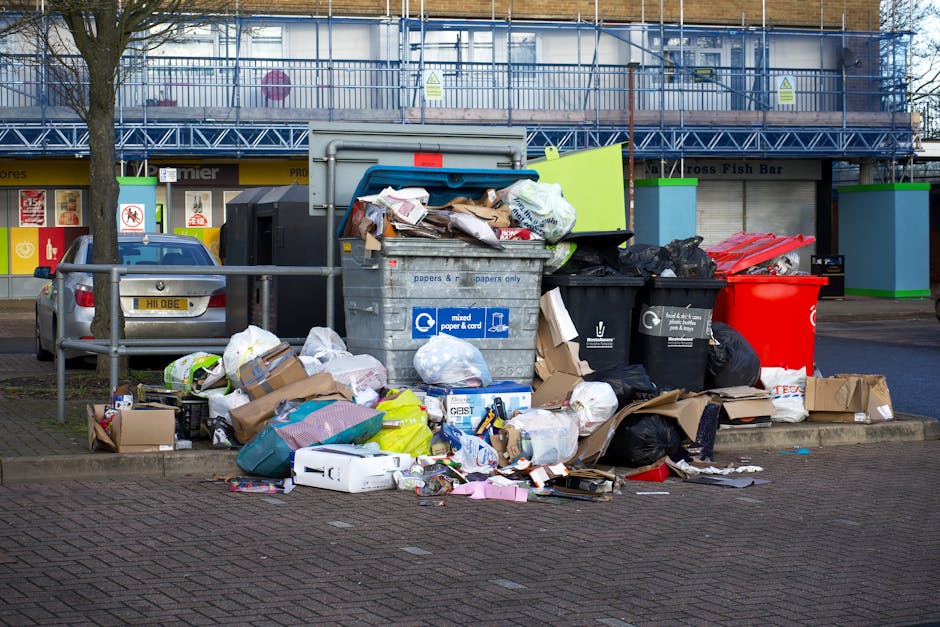
Estate Clearance: Rubbish Services for Thamesmead Estate
If you are dealing with a flat, maisonette, family home, or shared property in Thamesmead, estate clearance can feel like one of those jobs that grows legs. One cupboard becomes a hallway. The hallway becomes a van-load. And suddenly you are standing there wondering where to start, who should take what, and how to get rid of the rest without making life harder than it already is. That is exactly where estate clearance: rubbish services for Thamesmead Estate comes in.
In plain English, this is about clearing unwanted items from a property in a careful, organised way. It might be after a bereavement, before a sale, after tenants move out, or simply because a place has accumulated more furniture, bags, and broken odds-and-ends than anyone expected. Done well, it saves time, reduces stress, and helps you deal with waste responsibly. Done badly, it can create confusion, damage, and a lot of unnecessary back-and-forth.
This guide walks through what estate clearance actually means, how rubbish services work in practice, what to watch out for, and how to make sensible decisions if you are arranging a clearance in Thamesmead Estate or the wider area.
Key takeaway: the best estate clearance is not just about removing rubbish. It is about sorting, protecting valuables, handling awkward items safely, and leaving the property ready for its next step.
Table of Contents
- Why Estate Clearance: Rubbish Services for Thamesmead Estate Matters
- How Estate Clearance: Rubbish Services for Thamesmead Estate Works
- Key Benefits and Practical Advantages
- Who This Is For and When It Makes Sense
- Step-by-Step Guidance
- Expert Tips for Better Results
- Common Mistakes to Avoid
- Tools, Resources and Recommendations
- Law, Compliance, Standards, or Best Practice
- Options, Methods, or Comparison Table
- Case Study or Real-World Example
- Practical Checklist
- Conclusion
- Frequently Asked Questions
Why Estate Clearance: Rubbish Services for Thamesmead Estate Matters
Thamesmead has its own rhythm. You see a mix of estates, estates-within-estates, low-rise flats, walk-ups, and homes where access can be a bit fiddly. That matters, because clearance work is never only about lifting items out of a property. It is about access, parking, neighbours, lift use, stairwells, time limits, and the simple reality that bulky rubbish is awkward in shared residential spaces.
Estate clearance matters most when the property contains a blend of things: some to keep, some to donate or recycle, and some that simply have to go. The danger is treating everything as "rubbish" and rushing. To be fair, when you are under pressure that is an easy mistake to make. But one misplaced bag can mean lost paperwork, overlooked jewellery, or a family argument that nobody wants.
That is why proper rubbish services for Thamesmead estate clearance are useful. They help separate what is genuinely waste from what still has value, whether financial, sentimental, or practical. In a real clearance, that distinction is the difference between chaos and a clean handover.
There is also the matter of safety. Heavy wardrobes, damp mattresses, old white goods, damaged mirrors, and broken shelving do not move themselves politely. If you have ever tried to wrestle a sofa down a narrow stairwell at 7:30 on a weekday morning, you will know exactly what I mean. It is noisy, awkward, and usually a bit worse than you imagined.
For landlords, executors, property managers, and families, the big value is peace of mind. The right clearance service reduces guesswork and gets the property back into shape without turning the process into a second job.
How Estate Clearance: Rubbish Services for Thamesmead Estate Works
Most estate clearance jobs follow a fairly sensible pattern, even if the property itself feels anything but sensible. The work usually starts with a review of what is inside, how much needs removing, and whether the job involves a single room, a whole flat, or a larger multi-room clearance.
At the practical level, the team will usually sort items into broad groups: keep, donate, recycle, dispose, and special handling. This is not just tidiness for tidiness' sake. It helps prevent mistakes and gives you a clearer picture of the clearance scope. A room full of clutter can look like one mountain, but once things are grouped, the route forward is easier to see.
For Thamesmead Estate properties, access is often a key part of the planning. Are there lifts? Is there resident permit parking? Will the clearance need to happen in stages so the communal corridor stays clear? These are the small details that make a big difference on the day. A good rubbish removal team will plan around them rather than improvise at the door, which is never ideal.
Removal itself is usually carried out with loading, transport, and disposal arranged in one process. That means the property is cleared, the waste is collected, and recyclable items are separated where possible. Some teams also provide a sweep-through finish, which is handy if you want the room left in a presentable state rather than looking like the work has only half happened. And let's face it, half-finished is the last thing anyone needs.
If there are specific items like fridges, mattresses, bed frames, or old furniture, they may need different handling. For example, white goods and bulky items often require specialist disposal routes, not just a quick lift-and-go. That is why experienced teams matter more than "cheap and cheerful" options that sound fine until you are staring at a locked bin store and a fridge that will not fit through the doorway.
For readers comparing service types, it can help to think of estate clearance as broader than standard rubbish collection. A simple bin or small-load pickup is one thing; a full property clearance is another. The latter requires judgement, sorting, and a bit more patience.
Key Benefits and Practical Advantages
The obvious benefit is that the property gets cleared. But the better benefits are the ones people feel two or three days later, when they realise the stress has dropped away and the place is actually usable again.
- Less emotional strain: When a property contains personal belongings, the work can be exhausting. Having a structured clearance reduces decision fatigue.
- Faster turnaround: Estate clearances are often time-sensitive. A good team helps you keep moving, which is especially useful if a sale, tenancy change, or probate task is waiting.
- Better sorting: Reusable items, recyclable materials, and true waste are handled more carefully when the process is planned properly.
- Reduced lifting risk: Heavy or awkward furniture can be removed safely, rather than being dragged, scratched, or dropped.
- Cleaner end result: A property that has been properly cleared feels calmer immediately. Light gets in. You can breathe again. It sounds small, but it matters.
- Less waste going to landfill: Where possible, responsible teams separate reusable and recyclable materials instead of treating everything the same.
There is another advantage that people sometimes forget: clarity. Once the clutter is removed, decisions become easier. You can assess repairs, measure rooms, organise cleaning, or start the next stage without stepping over old chairs and mystery boxes every ten seconds.
In busy residential settings like Thamesmead Estate, that clarity is especially valuable. Shared access points are easier to manage, neighbours are less inconvenienced, and the property feels more under control. Sometimes the whole job is really about restoring momentum.
Who This Is For and When It Makes Sense
Estate clearance services are not only for one kind of customer. In practice, they help a wide range of people facing a property that needs to be emptied sensibly.
Typical situations include:
- Bereavement and probate: Families or executors may need to clear a home respectfully and methodically.
- End of tenancy: Landlords and letting agents may need a flat or house cleared before re-marketing.
- Downsizing: Older residents or families moving to smaller accommodation often need help dealing with surplus furniture and household items.
- Property sale or refurbishment: A cleared property is easier to present, repair, and value.
- Cluttered or neglected spaces: If a property has become too full for normal rubbish collection, a larger clearance is often the practical answer.
- Flat clearances: Shared buildings and estate layouts often need more careful planning than a simple curbside collection.
When does it make sense to book a clearance rather than trying to do it yourself? Usually when the job involves multiple large items, a time deadline, limited access, emotional attachments, or disposal issues you do not want to handle alone. If you are already juggling work, family, paperwork, and a slightly relentless to-do list, this is one job that is often worth handing over.
There is also a common point where people pause and think, "Can't we just leave this for council collection?" Sometimes yes, for one or two items. But for bigger estate jobs, council services are not always the fastest or most practical route, especially when you need several categories removed together.
Step-by-Step Guidance
If you want a smoother estate clearance, start with a proper plan. The work is much easier when you treat it as a process rather than a pile of things to sort later.
- Walk through the property first. Note the rooms, access points, stairs, lift availability, parking, and any items that may need special handling.
- Separate important belongings. Look for documents, keys, photographs, medication, valuables, and anything the family wants to keep.
- Decide what can be reused or donated. Some furniture or household goods may still be in useful condition.
- Identify awkward items. Mattresses, fridges, wardrobes, sofas, broken glass, and builder-style waste need extra attention.
- Match the service to the job. A full estate clearance is different from a standard rubbish collection. Make sure the service fits the scale.
- Check access and timing. In Thamesmead Estate, it is wise to think about neighbours, parking, and building rules before the team arrives.
- Confirm what happens after loading. Responsible disposal, recycling, and waste transfer should all be part of the process.
- Do a final sweep. Once the items are removed, check cupboards, loft areas, and under beds. People forget things there all the time. Honestly, the weirdest finds tend to live under beds.
A useful rhythm is: sort first, move second, remove third. It sounds obvious, but a lot of stress comes from doing those steps in the wrong order. One of the best things you can do is keep "keep" items physically separate from "to go" items. Even a couple of clearly labelled boxes can save hours.
If the property contains items you are unsure about, take a breath and pause. It is far better to ask a sensible question than to throw away something important because the room looks chaotic. In our experience, that one tiny pause often prevents the bigger headache later.
Expert Tips for Better Results
Good clearance work is not always about force. More often it is about judgement. Here are a few practical tips that make a real difference.
- Photograph the property before work starts. This creates a useful record, especially for probate, landlord checks, or handover discussions.
- Bundle similar items together. Books, textiles, small electricals, and soft furnishings are easier to manage when grouped sensibly.
- Keep one "do not move" zone. If the property is being cleared in stages, mark off the items that must remain untouched.
- Plan for stairs and tight corners. A sofa that looks manageable in the lounge can become a completely different creature on a landing.
- Be realistic about the condition of items. A scratched wardrobe may still be reusable, but a water-damaged mattress is a different story.
- Ask how recycling is handled. Responsible clearance usually separates reusable materials and avoids a lazy one-bag-fits-all approach.
One practical observation from residential clearances: clear access saves arguments. If the hallway is already wide enough, keep it that way. If the lift has a weight limit, respect it. If the estate has quiet hours, work around them. Simple, but very effective.
And here is a slightly unfashionable truth: the cheapest quote is not always the cheapest outcome. If a team turns up underprepared, spends longer than expected, or leaves sorting to you, the job can end up costing more in time and sanity. Neither of which is free, last time I checked.
Common Mistakes to Avoid
Estate clearances often go wrong in predictable ways. The good news? Most of them are avoidable.
- Rushing the sort-out: If you do not separate keep, recycle, donate, and dispose, things get mixed up fast.
- Not checking access properly: Parking issues, stair access, and building restrictions can slow everything down.
- Assuming all waste is the same: Mattresses, fridges, and large furniture may need specific handling.
- Forgetting sentimental items: People often find letters, photos, or small valuables in drawers after the main clearance has begun.
- Using the wrong service type: A bulk waste pickup is not always enough for a full property clearance.
- Ignoring neighbours and shared spaces: In a residential estate, a noisy or messy clearance can create avoidable friction.
- Leaving disposal decisions until the last minute: That is how decent items become landfill by default. Not great.
Sometimes the mistake is emotional rather than practical. People feel pressure to "get it done" and end up making quick decisions they later regret. If that sounds familiar, you are not alone. A steadier pace usually produces a better result, even if it takes an extra hour.
Tools, Resources and Recommendations
You do not need fancy equipment to manage a clearance, but a few simple tools make the process much easier.
- Heavy-duty bin bags: Useful for soft waste, textiles, and smaller mixed items.
- Label stickers or marker pens: Handy for marking keep, donate, and dispose piles.
- Boxes and crates: Better than loose piles for paperwork, photos, and fragile belongings.
- Gloves and sturdy footwear: Simple protection goes a long way in dusty or cluttered spaces.
- Phone camera: Great for documenting room condition and item inventory.
- Measuring tape: Useful if you need to plan removal of large furniture through tight entrances.
For service selection, look for a provider that is clear about loading, sorting, transport, and disposal. Transparency matters. A good operator should be able to explain how they handle bulky waste, what happens to reusable items, and how they manage access in places like Thamesmead Estate.
If you are comparing related services, these pages may help you understand the differences in scope: property clearance, house clearance, flat clearance, and bulky waste collection. Each one has its place, and the right fit depends on how much needs removing and how the property is laid out.
When furniture is part of the job, it may also help to review options such as furniture clearance or furniture removal and collection. For specific bulky items, pages like mattress disposal and sofa removal and collection can be useful too.
Law, Compliance, Standards, or Best Practice
Waste and clearance work in the UK should be handled responsibly. That means using lawful disposal routes, making sure items go to appropriate facilities, and avoiding fly-tipping or careless dumping. If a service is handling your rubbish, you want confidence that it is doing so properly. That is not just a nice-to-have; it protects you as the customer and supports safer waste management overall.
In practical terms, good best practice usually includes:
- Clear separation of waste types where possible
- Careful handling of electrical items and other awkward materials
- Responsible transport and disposal
- Attention to health and safety when lifting, loading, and moving items
- Respect for shared residential spaces such as corridors, lifts, and entrances
If you are arranging a clearance in a managed estate, it is wise to check any building rules about parking, loading times, lift protection, or access arrangements. These details are not glamorous, but they can make the difference between a smooth morning and a very long one.
For extra reassurance, it can help to review a provider's policies on health and safety, insurance and safety, and recycling and sustainability. Those pages do not do the work for you, obviously, but they do help show whether the service takes the job seriously.
And if you are curious about how a company handles wider operational trust points, about us can be a useful place to check the background and approach before you book.
Options, Methods, or Comparison Table
Choosing the right route depends on volume, urgency, and how much sorting is involved. Here is a straightforward comparison.
| Option | Best for | Pros | Limitations |
|---|---|---|---|
| Council collection | A small number of bulky items | Useful for limited waste, often simple for one-offs | May not suit full estate clearances or mixed loads |
| Private rubbish removal | Mixed waste, bulky items, quick turnaround | Flexible, faster, better for awkward access | Quality varies by provider |
| Full estate clearance | Whole properties, probate, move-outs, cluttered homes | Most comprehensive, supports sorting and completion | Usually needs more planning than a basic collection |
| DIY clearance | Very small jobs with plenty of time | Can be cheaper if you already have transport and help | Time-consuming, physically demanding, disposal can be tricky |
In many Thamesmead Estate situations, the middle path is the most practical: a private clearance service that can remove bulky items, sort mixed loads, and work within residential access constraints. A council service may still be helpful for a one-off item, but once you are dealing with a whole room or an entire property, the job often calls for a more complete approach.
Case Study or Real-World Example
Picture a typical late-morning clearance in a Thamesmead flat. The property is not extreme, not hoarded, not dramatic. Just lived in, and then suddenly needing a reset after a move. There is a sofa in the lounge, a bed base in the bedroom, a fridge in the kitchen, several bags of mixed household clutter, and a couple of boxes of family paperwork that nobody wants to lose.
The first pass is sorting. The papers are separated and checked. A few photographs are found in a drawer that no one expected. The sofa is measured against the stairwell route before anyone tries to shift it. The fridge is identified for proper disposal rather than dumped into the general pile. A small stack of items is set aside for reuse. Nothing dramatic. Just careful work.
By early afternoon, the rooms feel different. Not just emptier, but calmer. The light reaches the floor properly. You can hear your footsteps. The property is now ready for cleaning, inspection, or the next stage of handover.
That is the real value of estate clearance. It is not only removal. It is movement. A property that felt stuck starts to move again. And when a job is handled with care, people notice. Quietly, but they do.
Practical Checklist
Use this before booking or starting an estate clearance in Thamesmead Estate.
- Walk through the property and note every room to be cleared
- Set aside valuables, documents, keys, and sentimental items
- Identify large, heavy, or awkward items that need special handling
- Check stairs, lifts, parking, and access restrictions
- Confirm whether the job is a partial clearance or a full clearance
- Decide what should be kept, donated, recycled, or disposed of
- Ask how reusable items are handled
- Confirm whether the team can remove furniture, mattresses, and white goods
- Review safety, insurance, and disposal expectations
- Do a final room-by-room check before the property is handed over
If you want a simpler route, start with the hardest room first. It sounds odd, but that usually gives you the fastest sense of progress.
Conclusion
Estate clearance: rubbish services for Thamesmead Estate are about far more than emptying a property. They are about restoring order when a space has become complicated, time-sensitive, or emotionally loaded. The right approach protects what matters, removes what does not, and keeps the whole process steady rather than frantic.
For families, landlords, executors, and residents, the smartest move is usually to plan the job properly, sort before lifting, and choose a service that understands both residential access and responsible disposal. That is how you avoid stress, reduce waste, and get a proper result the first time.
If you are looking at a clearance and wondering whether now is the right moment, it probably is. These jobs rarely get easier by waiting. A clear plan, a practical team, and a careful approach can make a heavy day feel a lot lighter. Sometimes that is enough.
Get a free quote today and see how much you can save.
And if you need to look a little wider across London, you can also explore related local service areas such as waste recycling Greenwich and waste recycling Thamesmead for broader context on nearby coverage.
Frequently Asked Questions
What is estate clearance in simple terms?
Estate clearance is the organised removal of unwanted items from a property, often including furniture, household clutter, white goods, and general rubbish. It is usually used when a home needs to be emptied or prepared for sale, letting, probate, or renovation.
How is estate clearance different from ordinary rubbish removal?
Ordinary rubbish removal is usually about collecting waste. Estate clearance is broader. It often includes sorting items, separating valuables, handling bulky furniture, and making sure the property is cleared carefully from room to room.
Do I need to sort everything before the clearance team arrives?
It helps, but you do not need to do everything in advance. The most important thing is to separate items you want to keep, especially documents, sentimental belongings, and valuables. Anything else can usually be grouped more loosely before the team starts.
Can estate clearance services remove furniture and appliances?
Yes, in most cases they can remove furniture, mattresses, fridges, and other bulky items. Some appliances need special disposal handling, so it is sensible to mention them in advance rather than leave them as a surprise on the day.
Is estate clearance suitable for flats on estates like Thamesmead?
Yes. In fact, it is often especially useful for flats and estate properties because access can be more complicated. Lifts, stairs, parking, and shared corridors all need a bit of planning, and a proper clearance service should take that into account.
How long does an estate clearance usually take?
It depends on the size of the property, the amount of contents, and access. A small flat might take a relatively short visit, while a larger or heavily filled property may take much longer. The best estimate comes after a proper look at the job.
What happens to items that are still usable?
Usable items are often separated for reuse, donation, or recycling where appropriate. Good practice is to avoid sending everything to disposal if some items still have a useful life left in them.
Can I stay in the property during the clearance?
Yes, many people do. Some prefer to be present so they can answer questions and check items as the work progresses. Others prefer to step back and return once the main clearance is complete. Both approaches can work.
What should I check before booking a clearance company?
Check what they remove, how they handle bulky waste, whether they understand residential access issues, and whether they explain disposal and safety clearly. A good provider should be straightforward about the job, not vague.
Is probate clearance the same as estate clearance?
They overlap, but they are not identical. Probate clearance usually refers to clearing a property after someone has died and the estate is being administered. Estate clearance can also apply to downsizing, tenancy changes, and general property clear-outs.
Are there any items that need special attention?
Yes. Fridges, freezers, mattresses, electrical items, sharp objects, and hazardous materials need particular care. If you are unsure about any item, mention it early so it can be handled safely and lawfully.
What is the best first step if the property feels overwhelming?
Start with one room or one category of items, not the whole property at once. Separate keep items first. Then deal with the rest in stages. Small progress is still progress, and it is often enough to break the logjam.